Heretics Also Appeal to Scripture to Deceive Believers

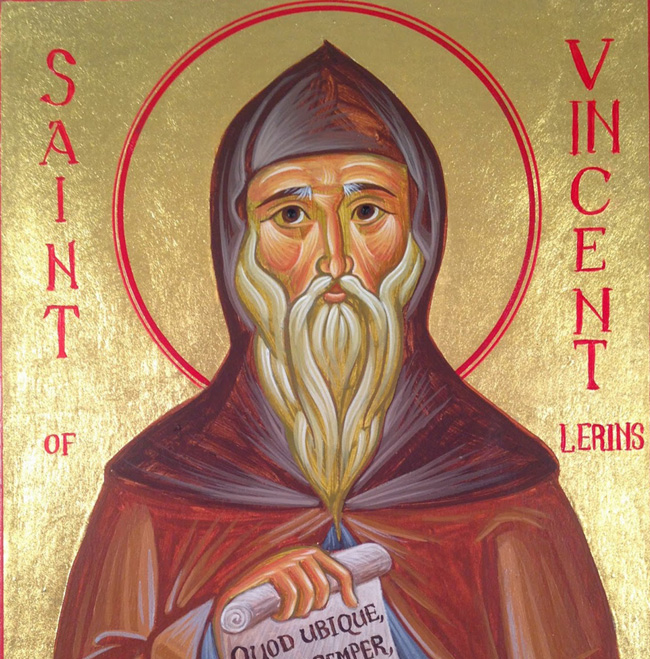
Heretics Appeal to Scripture Also - St. Vincent of Lerinsby St. Vincent of Lerins –

Here, possibly, some one may ask, Do heretics also appeal to Scripture? They do indeed, and with a vengeance; for you may see them scamper through every single book of Holy Scripture – through the books of Moses, the books of Kings, the Psalms, the Epistles, the Gospels, the Prophets.

Whether among their own people, or among strangers, in private or in public, in speaking or in writing, at convivial meetings, or in the streets, hardly ever do they bring forward anything of their own which they do not endeavor to shelter under words of Scripture.

Read the works of Paul of Samosata, of Priscillian, of Eunomius, of Jovinian, and the rest of those pests, and you will see an infinite heap of instances, hardly a single page, which does not bristle with plausible quotations from the New Testament or the Old.

But the more secretly they conceal themselves under shelter of the Divine Law, so much the more are they to be feared and guarded against. For they know that the evil stench of their doctrine will hardly find acceptance with any one if it be exhaled pure and simple. They sprinkle it over, therefore, with the perfume of heavenly language, in order that one who would be ready to despise human error, may hesitate to condemn divine words. [Read more…]

Sin as an Offense Against the Body

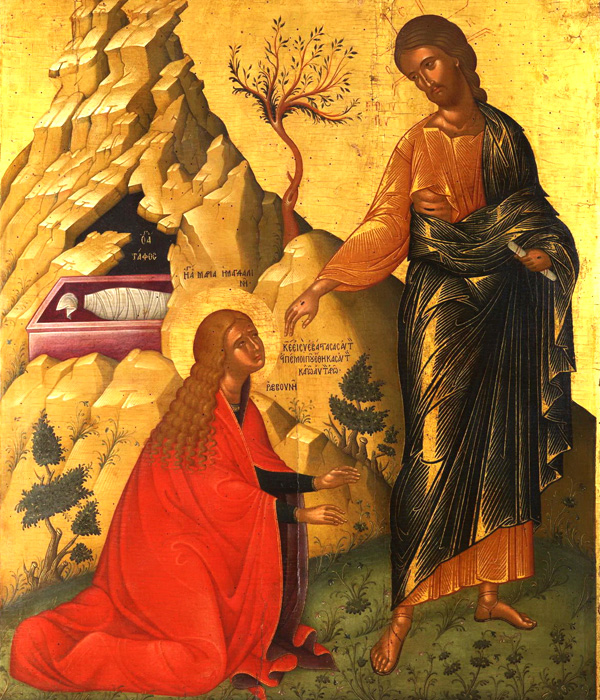
Mary Magdalene Sin as an Offense Against the Body by Fr. Tim McCauley –
“Every other sin that a person commits is outside the body, but the impure person sins against the body itself.” More than any other type of sin, St. Paul is suggesting that impurity is a sin against ourselves. A deep healing of such sins cannot be limited to a correction of external behavior, but must include a renewal of a relationship with God and ourselves, and the healing of the shame of original sin through the power of Christ’s death and Resurrection.

Our secular culture is almost cunning in its naiveté, suggesting that sexual expression outside of marriage—fornication, homosexual activity, pornography, masturbation—are neutral forms of bodily pleasure, left to individual choice. Yet this same culture is forced to reckon with the prevalence of addictions in the area of sexuality. The celebration of choice becomes the slavery of addiction, as Jesus himself solemnly warned us, “Everyone who commits sin is a slave of sin.” [Read more…]

Sloth (Idleness) a Very Dangerous Vice, Mother of Many Other Vices

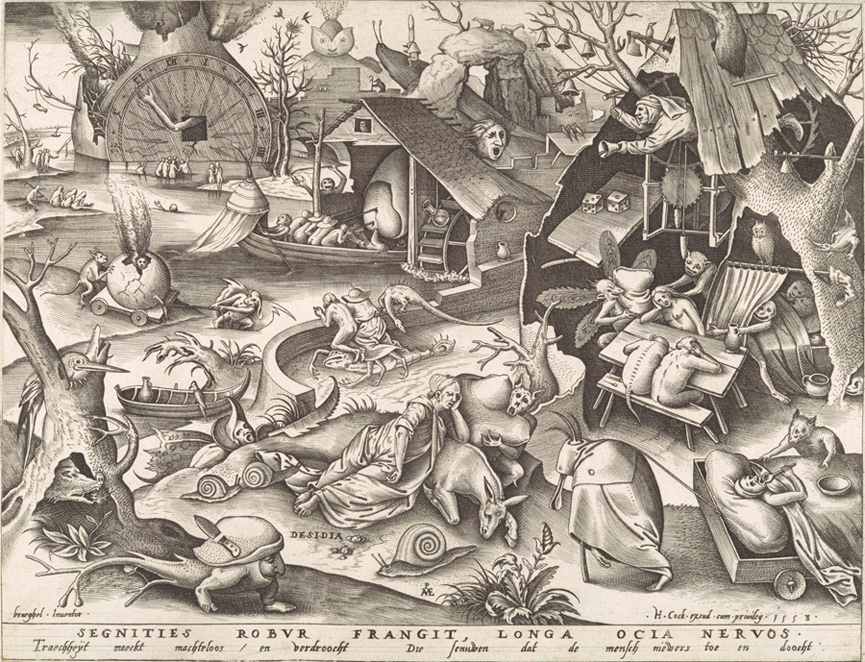
Sloth (Idleness) a Very Dangerous Vice, Mother of Many Other Vices by St. Luke, Archbishop of Crimea –
“O Lord and Master of my life! The spirit of idleness give me not!” Why does St. Ephraim the Syrian begin his prayer with a request about idleness [sloth], as if there are no worse faults?

In observing idleness [sloth] from the ordinary, everyday point of view we see that idleness is contemptible, and deserves all condemnation.

Idleness is a very dangerous vice, because it is the mother of many other vices. Idle people do not concentrate their thoughts on the profound seriousness of life, the huge responsibility that lies on them not only before people, but also before God Himself. [Read more…]

Christians Must Witness Their Faith, Speak Up, and Resist Evil

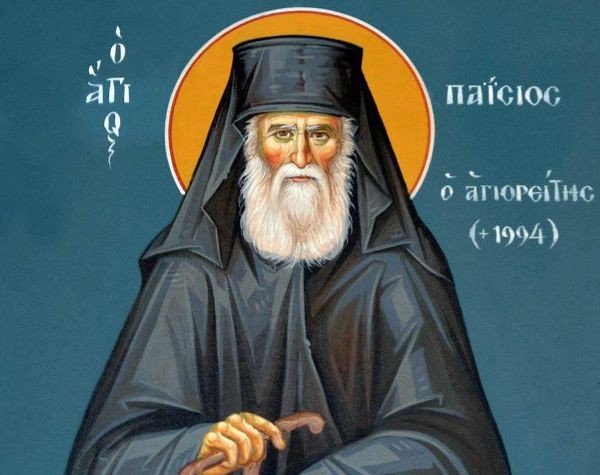
St. Paisios the Athonite by St. Paisios the Athonite –
If Christians don’t begin to witness their faith, to resist evil, then the destroyers will become even more insolent. But today’s Christians are no warriors. If the Church keeps silent, to avoid conflict with the government, if the metropolitans are silent, if the monks hold their peace, then who will speak up?

The spirit of lukewarmness reigns. There’s no manliness at all! We’ve been spoiled for good! How does God still tolerate us? Today’s generation is the generation of indifference. There are no warriors The majority are fit only for parades.

Godlessness and blasphemy are allowed to appear on television. And the Church is silent and doesn’t excommunicate the blasphemers. And they need to be excommunicated. What are they waiting for? Let’s not wait for someone else to pull the snake out from its hole so that we can live in peace.

They’re silent out of indifference. What’s bad is that even people who’ve got something inside have begun to grow cool, saying: “Can I really do anything to change the situation?” We have to witness our faith with boldness, because if we continue to be silent we’ll have to answer in the end. [Read more…]

On the Virtue of Goodness

On the Virtue of Goodness, Choose Goodby Fr. Lawrence Farley –
In his list of virtues which comprise the fruit of Spirit working in one’s life, St. Paul lists that of “goodness” (Greek agathosune, αγαθοσυνη) about midway in the list (Galatians 5:22f). One scarcely speaks of goodness as one of the virtues anymore. In our culture describing something as “good” is rather tepid praise; it is like saying something is “okay”, and “good” comes first in our ascending ladder of praise—“good, better, best”. Love, joy, and kindness are praised and admired, but goodness is hardly remembered at all.

Indeed, though it stood toward the summit of virtues in the ancient world, our culture replaces “goodness” as the summit of virtues with “tolerance”—a tolerance always subject to the whims of fashion and standing within a world which knows no unchanging moral compass. Those whims might dictate almost anything. [Read more…]

On the Character of Men and on the Virtuous Life: 170 Texts (Philokalia, Vol 1)

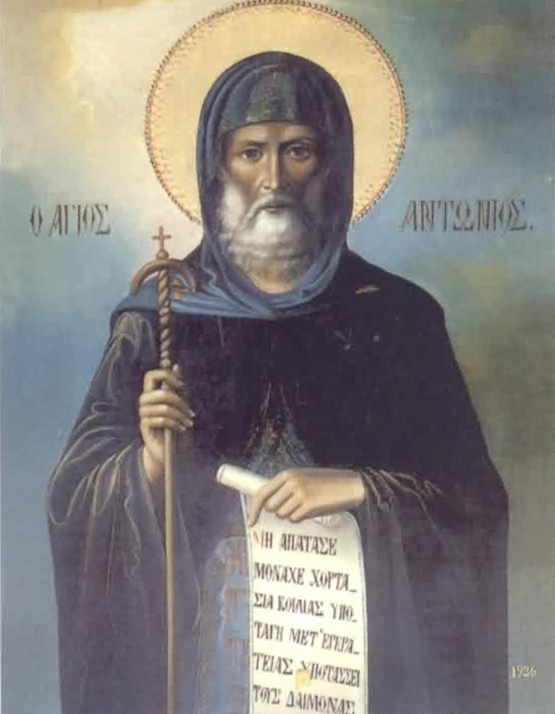
St. Anthony the Great Character of Men and the Virtuous Lifeby St. Anthony the Great –

1. Men are often called intelligent wrongly. Intelligent men are not those who are erudite in the sayings and books of the wise men of old, but those who have an intelligent soul and can discriminate between good and evil. They avoid what is sinful and harms the soul; and with deep gratitude to God they resolutely adhere by dint of practice to what is good and benefits the soul. These men alone should truly be called intelligent.

2. The truly intelligent man pursues one sole objective: to obey and to conform to the God of all. With this single aim in view, he disciplines his soul, and whatever he may encounter in the course of his life, he gives thanks to God for the compass and depth of His providential ordering of all things. For it is absurd to be grateful to doctors who give us bitter and unpleasant medicines to cure our bodies, and yet to be ungrateful to God for what appears to us to be harsh, not grasping that all we encounter is for our benefit and in accordance with His providence. For knowledge of God and faith in Him is the salvation and perfection of the soul. [Read more…]

Thou Shall Not Judge – The Misunderstood 11th Commandment

hou Shall Not Judge - The Misunderstood 11th Commandmentby Robert Meyer –
The idea that we can never judge about anything is patently absurd. To say that we can never judge is to wander aimlessly. The Scriptures tell us that we should reprove each other, speaking the truth in love. What our society lacks is righteous judgment. What we have an abundance of is knit-picking and indifference. Neither of those two alternatives promotes justice and righteousness.

Regardless of the level of theological sophistication, we can always be sure the critics “know” one thing: The Bible says that we should not judge one another. Anyone who would do so is clearly being un-Christian. Such obtuse reasoning is employed against Christians who offer a negative commentary on certain cultural trends, behaviors or lifestyles. Still, I wonder how many people have taken this concept to its logical conclusion? [Read more…]

The Goal of Classical Education is Truth

The Goal of Classical Education is Truthby Tom Jay –
A truly classical and Christian education must link the pursuit of truth, goodness, and beauty to the One Who is truth, goodness, and beauty.

“The least initial deviation from the truth is multiplied later a thousandfold.” Aristotle wrote this in the fourth century B.C. in a text called On the Heavens. Sixteen hundred years later Thomas Aquinas began his treatise On Being and Essence by paraphrasing Aristotle: “Because a small error in the beginning grows enormous at the end.…” The application of this wisdom to the moral life might be rather obvious. Tell a lie once, however small, and you will probably end up telling more. While it’s easy to see, in the realms of space or morality, how a slight error can lead to enormous complications later, these maxims are not only meaningful for astrophysicists and theologians. Teachers and school administrators would do well to reflect on these words as well. [Read more…]

There is No Love in a Lie

There is no love in a lie. Homosexuality is sinful.by Lisa Moeller –
There is no love in a lie. And the lie of homosexuality is that it comes from a place of love. When in all actuality it comes from a place of brokenness.

Love. I am compelled to address this topic because I have been approached so many times lately by those who feel that “love always wins” and “love will save the day” and “love is the answer” no matter what.

But, what does love actually mean? First of all, we didn’t create love. It was created for us by a God who understands its genuine definition. Therefore, only He can produce the genuine fruit of love in someone’s soul. [Read more…]

Nashville Statement Affirms Traditional Christian Principles on Marriage and Sexuality

Nashville Statement: Affirming Traditional Christian Principles on Marriage and Sexuality Here’s a worthy, true, and clear statement that all Orthodox Churches and hierarchs in America should support.

A coalition of conservative evangelical leaders across America issued a public declaration titled the Nashville Statement that affirms universal and traditional Christian principles on marriage and human sexuality. It is a response to an increasingly post-Christian, Western culture where many homosexual advocacy groups aggressively attack and purposely distort the moral teaching of Christianity.

“The spirit of our age does not delight in God’s good design of male and female. Consequently, confusion reigns over some of the most basic questions of our humanity. … The aim of The Nashville Statement is to shine a light into the darkness — to declare the goodness of God’s design in our sexuality and in creating us as male and female.” ~ Denny Burk (President, Council on Biblical Manhood and Womanhood) [Read more…]