Mere Existence and the Age to Come

Great Divorce Mere Existence by Fr. Stephen Freeman –
C.S. Lewis, in his marvelous little book, The Great Divorce, uses the imagery of “solidity” versus “ghostliness” to make a distinction between those who have entered paradise, and those who have not. He clearly did not mean to set forth a metaphysical model or to suggest “how things are.” But the imagery is very apt and suggestive when we take a look at what it means for something or someone to exist.

The nature of our secularized worldview is to take all that we see as a presentation of reality and truth. The daily world as we experience it is considered to be the very definition of reality. This is the natural world. Any other perception or presentation of reality is thus supernatural or something other than natural. For those who accept this definition, the onus is on those who suggest that reality is in anyway different than the daily perception of the modern secularized world. To be a “skeptic” is thus not to question everything, but to question everything other than what is perceived as normal and natural. [Read more…]

Fig Leaves and Falsehoods

Morality Right and Wrong by Janet E. Smith –
The exposé of Planned Parenthood engineered by Live Action has not only disclosed some illegal and immoral operations of Planned Parenthood, it has also revealed sharp divergences in the pro-life movement and Catholic community about what counts as lying. Pro-lifers are, of course, thrilled that more of the evildoing of Planned Parenthood has been brought before the public, leading many legislators to vote to cease government funding of the organization. But some ask: By utilizing actors posing as pimps and prostitutes and falsely claiming to employ fourteen- and fifteen-year-old sex workers who need abortions and gynecological services, did Live Action use an evil means to a good end?

The answers vary. For instance, Christopher Tollefsen wrote in the online journal Public Discourse that intentionally telling falsehoods to anyone is immoral. He holds that people faced with such challenges as protecting Jews from Nazis should resist them by means other than falsehood and volunteer to die with any Jews captured. [Read more…]

Benedictine Monk: Remaining in Jesus the True Vine

Jesus the True Vine
I am the vine, you are the branches

by Fr. Gregory Gresko –
In listening attentively to the Word of God, we come to realize authentic communion with our Lord and are perfected slowly but surely in love of His Will through the transforming power of the Holy Spirit, who is able to safeguard us from despairing or presuming. “If you remain in me and my words remain in you, ask for whatever you want and it will be done for you” (Jn 15.7).

As we continue celebrating the Resurrection of our Lord Jesus Christ during this joyous Easter season, the Gospel passage from Wednesday’s liturgy called us to pause reflectively upon the image of Jesus as the true Vine and His people as the branches. Jesus teaches us: “I am the true vine, and my Father is the vine grower. He takes away every branch in me that does not bear fruit, and everyone that does he prunes so that it bears more fruit . Remain in me, as I remain in you. Just as a branch cannot bear fruit on its own unless it remains on the vine, so neither can you unless you remain in me” (Jn 15.1-5). [Read more…]

To Seek God and to Let Oneself Be Found by Him

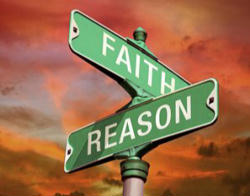
Faith and Reason Define Christianity by Deacon Keith Fournier –
Naturally, the humility of reason is always needed, in order to accept it: man’s humility, which responds to God’s humility

Christians of the nascent Church did not regard their missionary proclamation as propaganda, but as an inner necessity, consequent upon the nature of their faith: the God in whom they believed was the God of all people, the one, true God, who had revealed himself in the history of Israel and ultimately in his Son, thereby supplying the answer for which all people, in their innermost hearts, are waiting. […]

Yesterday, I covered the launch of Pope benedict XVI’s outreach called “The Court of the Gentiles” intended to encourage a dialogue with non-believers. The effort debuted in Paris over the weekend. It already has appointments in Tirana, Albania, Stockholm, Sweden, numerous locations in the United Sates, Canada and Asia. This effort is the inspiration of Pope Benedict XVI, the Missionary Pope, and is being led by Cardinal Gianfranco Ravasi who heads the Vatican’s culture office. [Read more…]

The Reasonableness of Christianity

Jesus Christ - Lord God and Saviorby Jack Kerwick –
Contrary to atheistic boilerplate, Christianity is anything but a crutch for the weak minded and timid hearted. Christians have gone to great lengths over the centuries to show that, while reason is no substitute for faith, and while it can never occupy anything other than a subordinate position with respect to the latter, reason can indeed establish at least the probability of God’s existence. Some Christians have gone further than this to argue that God’s existence is rationally demonstrable — that is, that it can be established with certainty by reason alone.

St. Anselm, the eleventh century bishop of Canterbury, is famous for his “ontological proof” for God. Anselm tried to show that there was no way that God can’t exist. The idea of God, Anselm reasoned, is the idea of a being “than which none greater can be conceived.” When the atheist and the theist deny and affirm God’s existence respectively, it is this idea that they have in mind. But since it is better for a being to have existence than for it to lack it, and since God is, by definition, the best, the conclusion is inescapable: God necessarily exists. It is no more possible, logically, to affirm the idea of God while simultaneously denying His real existence than it is possible to affirm the definition of a “bachelor” while denying that a bachelor is an unmarried man. [Read more…]

We Should Not Despair, Even If We Sin Many Times

St Peter of Damascus by St. Peter of Damascus –
Even if you are not what you should be, you should not despair. It is bad enough that you have sinned; why in addition do you wrong God by regarding Him in your ignorance as powerless? Is He, who for your sake created the great universe that you behold, incapable of saving your soul? And if you say that this fact, as well as His incarnation, only makes your condemnation worse, then repent; and He will receive your repentance, as He accepted that of the prodigal son (cf. Luke 15:20) and the prostitute (cf. Luke 7:37-50).

But if repentance is too much for you, and you sin out of habit even when you do not want to, show humility like the publican (cf. Luke 18:13): this is enough to ensure your salvation. For he who sins without repenting, yet does not despair, must of necessity regard himself as the lowest of creatures, and will not dare to judge or censure anyone. Rather, he will marvel at God’s compassion, and will be full of gratitude towards his Benefactor, and so receive many other blessings as well. [Read more…]

What Is Hell Like? Does It Even Exist?

Hell is what happens when human beings say to the God in whose image they were made, we don’t want to worship You. We don’t want our human life to be shaped by worshiping You. We don’t want who we are as humans to be transformed by the love of Jesus dying and rising for us. We don’t want any of that. We want to stay as we are and do our own thing.
[Read more…]

In Defense Of The Christmas Tree

Christmas Tree Not Pagan, Christian Originby Fr. Daniel Daly –
Our Christmas tree is derived, not from the pagan yule tree, but from the paradise tree adorned with apples on December 24 in honor of Adam and Eve. The Christmas tree is completely biblical in origin.

Several years ago during the Christmas season, a religious program on television caught my attention. The program featured a discussion on the dangers of cults, especially to young people. I found myself agreeing with the panelists as they warned young people about the hazards of involvement in occult or “new age” spirituality.

During the interview, however, one participant made a statement that shocked me: “…and the Christmas tree is pagan too…,” he asserted. The Christmas Tree? Pagan? Could it be that something most of us enjoy so much might be actually pagan in origin? Despite its growing commercialization, the Christmas tree is still associated with the fondest memories of our early childhood. Who does not remember approaching the tree on Christmas morning? [Read more…]

Knowing God, Crucial to Living as a Christian

Knowing God Packer
Eminent Christian theologian J.I. Packer’s best known book is Knowing God. In the book he emphasizes that a lifelong pursuit of knowing God should embody the Christian’s existence. According to Packer, however, Christians have become enchanted by modern skepticism and have joined the gigantic conspiracy of misdirection by failing to put first things first.

11/30/2010 – Chuck Colson –

According to Packer, studying the nature and character of God isn’t, as many Christians suppose, abstract and theoretical, but, instead, the most practical project we can undertake. This knowledge is crucial to living as a Christian.

In fact, attempting to live the Christian life without this knowledge isn’t only foolish, it’s a kind of self-cruelty—denying ourselves the riches of our own faith. [Read more…]

The Glory of Humility

St. John the Baptist

11/15/2010 – Deacon Douglas McManaman –
The word ‘human’ comes from the Latin ‘humus’, which means ‘dirt’ or ‘soil’. Man is from the earth.

I often tell my students that what they learn in the course of a semester, in their math class, for example, or in their chemistry classes, or physics, etc., took centuries for the most brilliant human beings to uncover. Once it has been uncovered, however, it appears to be so simple. Why did it take so long? This is true especially for philosophy. It takes years and years to dispose the intellect to learn such abstract truths, and from these truths it is possible to go on to demonstrate, through reason alone, the existence of God, and it is also possible, through reason alone, to show that God is one, eternal, the source of all that is good and beautiful, that He is Beauty Itself, Goodness Itself, and Truth Itself. And when we finally come to see it, we inevitably think: “This is so clear and simple; why did it take years to get this?”

The reason is that human beings, by nature, are slow. We are the highest beings on the hierarchy of material beings, but we are the lowest beings on the hierarchy of God’s intellectual creatures. [Read more…]