Daddy’s Little Girl – Happy Father’s Day 2012

Father and daughter hold hands by Grace Harley –
Fathers, what are you planting in the hearts and minds of your own little daughter? You have a most sacred calling and we honor your dedication to the task.

This week is the two-year anniversary of the passing from this world of my adored father. The pain is still so excruciating that at times I cannot speak or move. If I had to tell you about my father in one word, it would be “majestic”. It is a word seldom used and mostly reserved for the sacred and the royal. Thus, it is the exact word fit for the man that I call “Daddy”.

My bereavement is a pain that I wish every child to one day know for it indicates the depth of great love known, great character witnessed, and great teaching imparted. This is the grief and the glory known by all females who are called “Daddy’s Little Girl.” Fathers everywhere take heed of what you say, what you do, who you are, and whose you are. Your own little daughter is watching and learning. This is not a conscious or deliberate effort on our part; it is instilled in our hearts by Creator God. Fathers, you are the “picture of God” to that little one who calls you Daddy. Will she learn from watching you just what God looks like? Is your face to her tender heart actually the very face of God? [Read more…]

The Church’s Worst Enemies

Worst Enemies of the Church by James V. Schall, S.J. –
When asked why he entered the Church, Chesterton, in a famous passage, replied: “To get rid of my sins.” The New Testament also makes it clear that this riddance of sins is the central purpose of redemption. Christ did not come so much to define what sins were – we have to be pretty obtuse not to have an inkling of what they are – but to forgive them.

He claimed this power, which was indeed a divine power. That claim scandalized the Jewish leaders who heard Him. But He was firm in His purpose. He proceeded to give His apostles in the Church power to continue this central purpose, but only in His name.

Christ’s coming, then, is a relief that we finally have some authentic way to get rid of our sins. The presumption is that we want to do so because we know the burden they impose on each of us. The “thou shalt not’s” of the commandments are pretty basic. [Read more…]

Doing Good for Goodness Sake? An Atheist’s Game of Scrabble

God and Adam Creation by Andrew M. Greenwell, Esq. –
In the order of being, there can be no natural moral law without the existence of God. In the order of being, implicit in the belief of a natural moral law is the existence of God. A moral law makes no sense without a Divine Legislator.

In a comment to a recent article I wrote, the notion that God is necessary for a natural moral law to exist was challenged by reader who identified himself as an atheist. God was unnecessary for morality to exist, he argued. “I am an atheist,” he observed. “I do good for goodness’ sake,” as if Christians don’t.

There is no reason not to take him at his word. If we take him at his word, our atheist reader believes in the first self-evident principle of the natural moral law: do good and avoid evil, which is the same thing as “do good for goodness’ sake.” [Read more…]

Without Justice, What Else is the State But a Great Band of Robbers – St. Augustine

St. Augustine Without Justice State is a Great Band of Robbers by Andrew M. Greenwell, Esq. –
In his book City of God, St. Augustine famously said, “without justice, what else is the State but a great band of robbers?”  This statement seems to be a favorite of Pope Benedict XVI, and he has recruited it in warning lawmakers, particularly lawmakers in the Western nations with Christian heritage, of the way to which they are headed.

He referred to these words in his address to the German Parliament or Bundestag when he visited Germany.  Some years earlier, in his encyclical Deus caritas est, Pope Benedict XVI referred to those very same words.

It is useful from time to time to recall these words of St. Augustine and the deep truth that they convey. [Read more…]

Are the “Less Fortunate” Less Fortunate?

Dennis Prager
Dennis Prager

by Dennis Prager –
In his front-page-of-the-business-section “Economic Scene” column in The New York Times last week, Eduardo Porter wrote, “The United States does less than other rich countries to transfer income from the affluent to the less fortunate.”

Think about that sentence for a moment. It ends oddly. Logic dictates that it should have said, “transfer income from the affluent to the less affluent,” not the less fortunate.

But for Porter, as for the left generally, those who are not affluent are not merely “less affluent,” they are “less fortunate.”

Why is this? Why is the leftist division almost always between the “affluent” and the “less fortunate” or between the “more fortunate” and the “less fortunate”?

To understand the left, one must understand that in its view the greatest evil is material inequality. The left is more troubled by economic inequality than by evil, as humanity has generally understood the term. [Read more…]

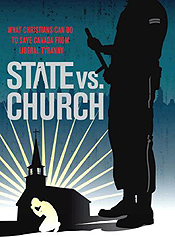
Two There Are: The Church, the State and the Dangers of Radical Secularism

Church vs State God vs Secularism by Andrew M. Greenwell, Esq. –
Both Church and State have public voices; both sing a song. The Catholic, both a citizen and a member of Christ’s faithful, hears both songs and both voices, for he or she knows there are two. But like St. Thomas More’s last words as he approached the scaffold and imminent death, the Catholic is “the King’s good servant, but God’s first.” One song, one voice in particular, the voice of God, the vox Domini Iesu Christi, holds him in absolute thrall. …

Duo sunt,” said the 5th century Pope Gelasius I in a famous letter to Emperor Anastasius, “quibus principaliter mundus hic regitur.” “Two there are by which this world is ruled.” Pope Gelasius I merely reformulates what is the teaching of our Lord, and which is part of reality, of what is, in the political world for those who bask in the benefit of Revelation. “Render unto Caesar that which is Caesar’s, and to God the things that are God’s.” (Matt. 22:21) Since Christ came into this world, the Christian knows that there are two public songs, and not just one, in the world.

The Catholic accepts the duo sunt as part of social reality. There is therefore in the Catholic mind, both Church and State, and a natural and necessary separation of Church and State. But this separation of Church and State does not imply subordination of Church to State. Quite the contrary, the State and the Church are coordinate powers each with its proper sphere. [Read more…]

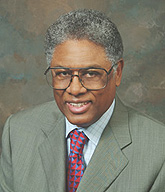
The ‘Progressive’ Legacy

Thomas Sowell
Thomas Sowell
by Thomas Sowell –
Whatever the vision or rhetoric of the Progressive era, its practice was a never-ending expansion of the arbitrary powers of the federal government. The problems they created so discredited Progressives that they started calling themselves “liberals” — and after they discredited themselves again, they went back to calling themselves “Progressives,” now that people no longer remembered how Progressives had discredited themselves before.

Barack Obama’s rhetoric of “change” is in fact a restoration of discredited ideas that originated a hundred years ago.

Although Barack Obama is the first black President of the United States, he is by no means unique, except for his complexion. He follows in the footsteps of other presidents with a similar vision, the vision at the heart of the Progressive movement that flourished a hundred years ago. [Read more…]

ET and Politics, The Search for Meaning

Chuck Colson
Chuck Colson

by Chuck Colson –
In his book, Lost in the Cosmos, Walker Percy asked “why is Carl Sagan so lonely?” Percy’s question was prompted by the popular scientist Carl Sagan’s insistence that ET must be out there somewhere, despite the lack of any evidence to back it up. Percy believed that this insistence said more about Sagan and people like him, than it did about the possibility of extra-terrestrial life.

According to Percy, Sagan and others who reduced everything, including man, to soulless atoms, were desperate for something to transcend this purely-material existence. Not believing in God, they hoped a phone call from ET would do the trick.

Unfortunately for the scientists, thirty years after the publication of Percy’s book, we still haven’t heard from ET. And it’s not for lack of looking: Scarcely a week goes by when we don’t read or hear about yet another “earth-like” planet being discovered by astronomers.

Yet ET remains silent. [Read more…]

Silliest Pro-Abortion Argument Ever: ‘We Can’t Legislate Morality’

We Can't Legislate Morality by Kristen Walker –

Tell me if this has ever happened to you. It’s lunchtime. You are eating at your desk at work and decide to look at Facebook. It’s as exciting as ever. Your aunt had a burrito for lunch. A girl you haven’t seen since college got a new tattoo. Someone is super happy it’s almost Friday.

Then you see that a virtual stranger (there’s a double meaning in that) has commented on one of your posts. And she has said something so asinine that you put down your fried pickle (’cause you’re in Texas and you eat stuff like that) and respond.

It’s daunting, the task before you. Do you even want to undertake this? Can you really change someone’s mind about abortion in one Facebook comment?* [Read more…]