Morality Is Not Hate

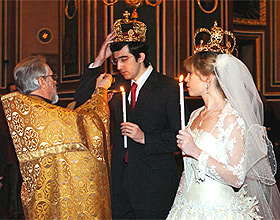
Orthodox Marriage Weddingby Fr. Mark Hodges –
This week, U.S. Attorney General Holder announced Obama’s decision not to uphold the Defense of Marriage Act (DOMA), which was passed by a bipartisan overwhelming majority and signed by Bill Clinton in 1996. Significantly, the Attorney General described anti-sodomy beliefs as “animus,” which means “vehement emnity,” “hatred” or “ill will.”

This echoes Justice Ruth Bader Ginsburg’s anti-Christian view, stated in a Supreme Court decision upholding the ejection a Christian legal group for not allowing open homosexuals in leadership positions, that “Condemnation of same-sex intimacy is, in fact, a condemnation of gay people,” and “Our (Supreme Court) decisions decline to distinguish between status and conduct.” (By this reasoning, if you don’t support gluttony, you “condemn” overweight people.)

The ACLU has hailed the Obama Administration’s decision as “the tipping point in the gay rights movement.” Indeed, it may be. It is certainly yet another turn toward moral insanity, as the Fathers and Mothers of the Church predicted, when the world calls evil “good” and good “evil.” [Read more…]
Fr. Johannes: Philadelphia – The Cost of Equivocation

Fr. Johannes Jacobse

by Fr. Johannes Jacobse –
Why such outrage over the Philadelphia abortionist? What moral difference is there between severing the spinal cord of a newborn with a pair of scissors and dismembering a baby with a scalpel a few moments before its birth? There isn’t any.

Yet the outcry over the brutality indicates that the fiction of viability may be lifting, and not a moment too soon. Viability, the idea that an unborn child has value only when it can live outside the womb, is a concept that the ignorant still believe has scientific credibility. It’s a rhetorical pretense that helps us avoid what we don’t want to see.

The cold hand of the malefactor reveals that the brutality outside the womb occurs inside it too. It’s not so easy to pretend anymore that a difference exists because we see one but not the other. Josef Mengele at least maintained the pretense that he was serving science. This butcher wouldn’t even do that. His staff kept their lunches in the same refrigerator where they stored left-over fetal parts.

Should we be shocked that the abortionist treated the newly born like a piece of pork? Why? How is it any different than how he treats the unborn? [Read more…]

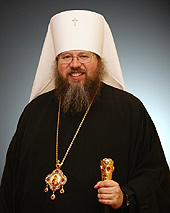
Metropolitan Jonah’s Message for Sanctity of Life Sunday 2011

Metropolitan Jonah
Metropolitan Jonah

Dearly Beloved in Christ:

The Orthodox Church is like St John the Baptist crying out in the wilderness, or Jesus baptizing by the Jordan. We, like them, preach a message of repentance and the remission of sins in the new desert, the decadent culture of the modern West, mired in the chaos of moral collapse.

The Orthodox Church’s message is a message of hope, of healing, of the transformation of one’s life, of the realization of the divine potential in each human being. Yet, this message requires not only acceptance, but a voluntary cooperation by those who accept this message. The Church demands a serious discipline of all who would be members, all who would follow this straight and narrow difficult path that leads to salvation. It is a way that demands that we be crucified to the world and its desires, dead to the flesh and its demands, so that we can be focused solely on God.

The culture of this world cries out for “justice.” It demands vengeance, and it despises the forgiveness of God. It cries out for bread in the wilderness; and when it is not satisfied with bread, it demands meat. It ignores the radiant Presence of God, and laments the fleshpots of Egypt. Nothing can satisfy its endless lusts for money, sex and power. In terror it refuses to even stand in silence and contemplate the abyss of death, ever trying to distract itself from the ultimate annihilation it so boldly preaches. This complete denial of death thus leads it to the kind of decadence that has overtaken us: greed, hedonism and licentiousness, which have led to gender confusion, depersonalization, and the loss of value of human life. A culture of hedonism leads only to the narcissism of a solitary individual, enslaved by his/her lusts, using others for the gratification of the passions. [Read more…]

What Would You Do With Your Life If You Knew You Could Not Fail?

Anthony Davar - Your Goal in Lifeby Anthony Davar –

What thoughts and fears are keeping you from starting or achieving your goal, and moving forward? Those who succeed and those who fail in life have the same fears, but the successful go forward with action despite their fears. Courage is not the absence of fear, but doing what is right despite one’s fears. […]

Talking with some dear friends recently, I asked “What one thing would you do with your life if you knew you could not fail?” The answers were inspiring.  See if you find your life’s desire among them: [Read more…]

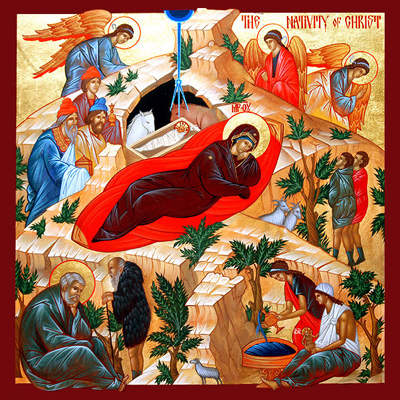
In Defense Of The Christmas Tree

Christmas Tree Not Pagan, Christian Originby Fr. Daniel Daly –
Our Christmas tree is derived, not from the pagan yule tree, but from the paradise tree adorned with apples on December 24 in honor of Adam and Eve. The Christmas tree is completely biblical in origin.

Several years ago during the Christmas season, a religious program on television caught my attention. The program featured a discussion on the dangers of cults, especially to young people. I found myself agreeing with the panelists as they warned young people about the hazards of involvement in occult or “new age” spirituality.

During the interview, however, one participant made a statement that shocked me: “…and the Christmas tree is pagan too…,” he asserted. The Christmas Tree? Pagan? Could it be that something most of us enjoy so much might be actually pagan in origin? Despite its growing commercialization, the Christmas tree is still associated with the fondest memories of our early childhood. Who does not remember approaching the tree on Christmas morning? [Read more…]

Orthodox Christian Responsibility in the Public Arena

Fr. John Peck
Fr. John Peck
by Fr. John Peck –
First of all, let me begin by saying that it is my duty, as a priest and pastor, to impose moral standards on you. Part of my job and function is to teach Christian morality and to get us, as a body, to adhere to Christian moral standards, so before you come to me with complaints about the separation of Church and state, be aware that I am doing my duty in telling you what the Church, as the Body of Christ, teaches about life and responsibility.

Moral theology in the Orthodox Church in America is pretty loosey-goosey, as is clearly evidenced by the Reflections on Voting for Orthodox Christians article that was posted, at first anonymously, on the OCA website. I have said, and will say here, that a more poorly reasoned collection of moral mish-mush does not yet exist. If you have read it, you can see that what is being said behind the lines is, ‘Things like abortion, euthanasia, human cloning, gay marriage and embryonic stem cell experimentation are wrong, but we don’t like the candidate who stands against these things, and anyway, capital punishment is wrong, and harming the environment is wrong.’ The statement that we are forced to become ‘reluctant republicans’ or ‘reluctant democrats’ betrays the writer’s real concern, which is to look impartial politically. He would have been very welcome by the Soviets in Russia, as a Christian who does nothing about his Christianity… [Read more…]

Vatican II and the Orthodox Bishops

Fr. Thomas Hopko
Fr. Thomas Hopko

10/14/2010 – Fr. Thomas Hopko –
Orthodox Christians devoted to accountability are surely aware that accountability in behavior cannot be separated from accountability in understanding since practice (praxis) is necessarily connected to vision (theoreia).

This conviction inspires me, given the present state of things, to raise the following question:

Is it possible that the teaching of the Second Vatican Council about the ministry of bishops in the Roman Catholic Church is now being taught and practiced in an adapted and altered form in our Orthodox churches today?

Let me explain why I raise such a question.

According to the Second Vatican Council of the Roman Catholic Church, following Vatican I and the Council of Trent, bishops are not organically connected to the specific dioceses in which they serve. They rather have their episcopal position and power by virtue of their personal sacramental consecration as bishops. [Read more…]