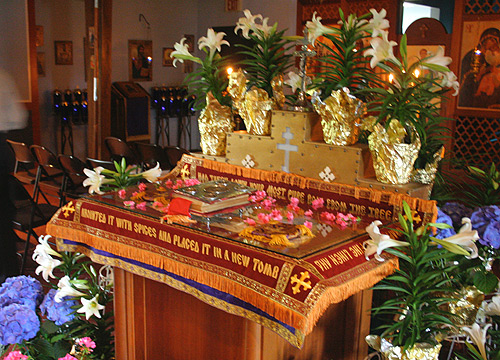
 On Friday night, the Matins of Holy and Great Saturday, a unique service known as the The Lamentations at the Tomb (Epitáphios Thrēnos) is celebrated. This service is also sometimes called Jerusalem Matins. Much of the service takes place around the tomb of Christ in the center of the nave. A unique feature of the service is the chanting of the Lamentations or Praises (Enkōmia), which consist of verses chanted by the clergy interspersed between the verses of Psalm 119 (which is, by far, the longest psalm in the Bible).
At the end of the Great Doxology, while the Trisagion is sung, the epitaphios is taken in procession around the outside the church, and is then returned to the tomb. Some churches observe the practice of holding the epitaphios at the door, above waist level, so the faithful most bow down under it as they come back into the church, symbolizing their entering into the death and resurrection of Christ. [Read more…]
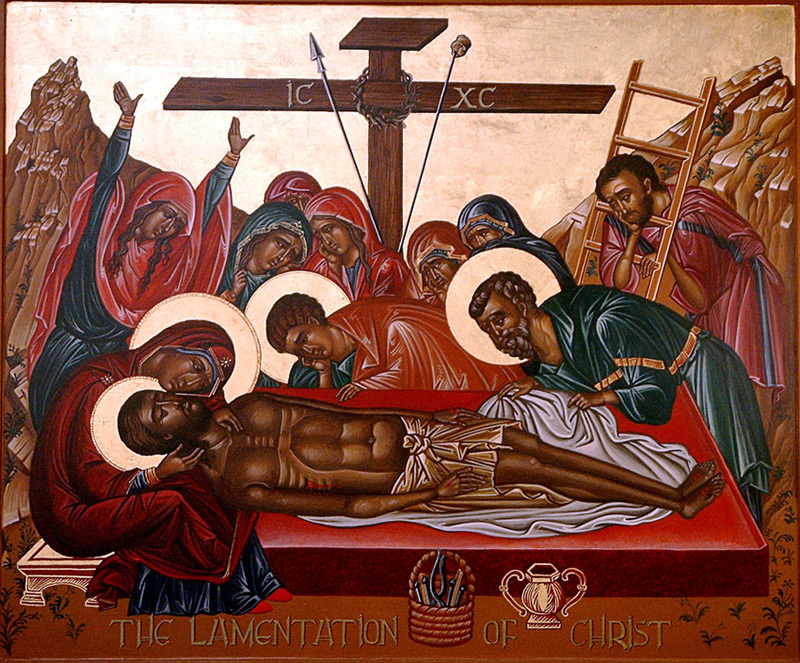 Holy Friday, also known as Good Friday or Great Friday, is a holy day observed by Christians commemorating the crucifixion of Jesus Christ and his death at Calvary. This day is commemorated during Holy Week as part of the Paschal Triduum on the Friday preceding Easter Sunday, and often coincides with the Jewish observance of Passover.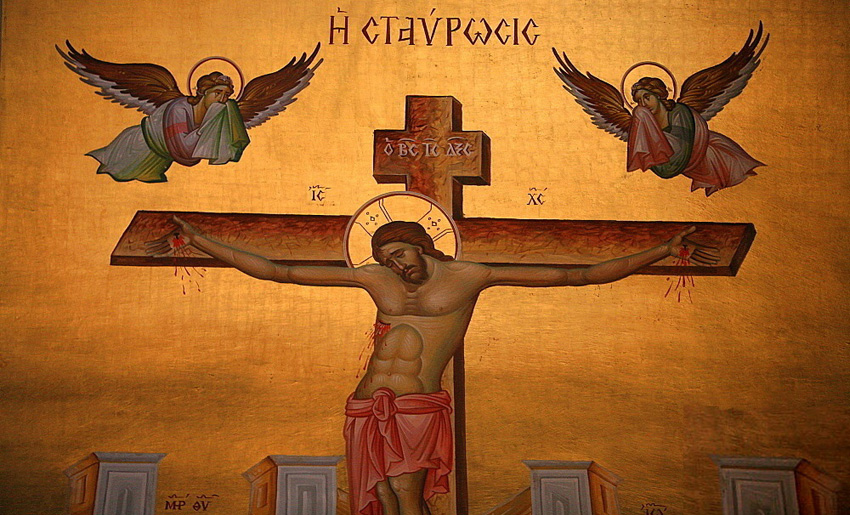
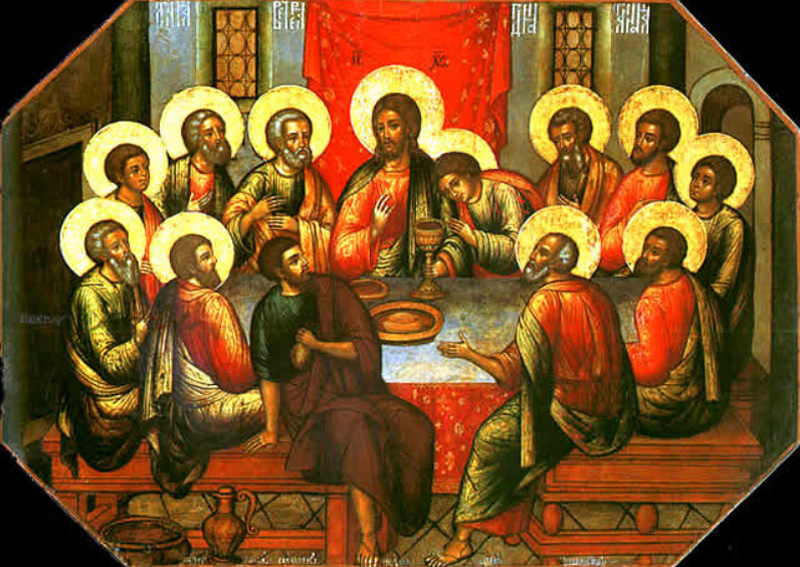 Holy Thursday begins with the celebration of vespers and the Divine Liturgy of St. Basil with a Reserved Eucharist in representation of the earthly presence of Christ realized at the Last Supper.
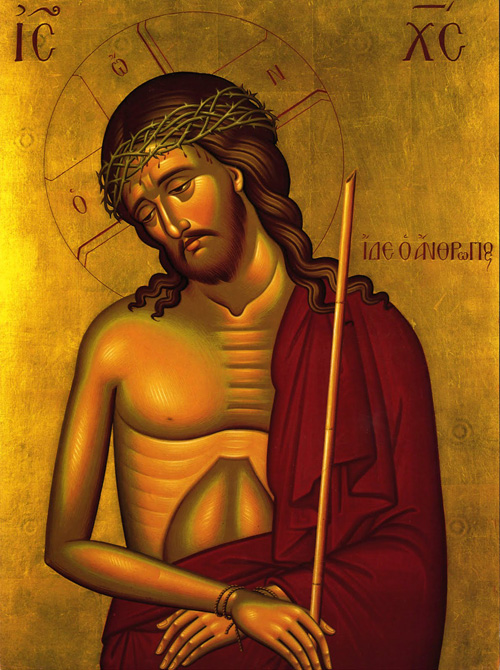 Christ the Bridegroom is the central figure in the parable of the ten Virgins (Matthew 25: 1-13); Christ is the divine Bridegroom of the Church as described in the Book of Isaiah (chapter 54), as well as the primary image of Bridegroom Matins.