
 by Bruce Walker –
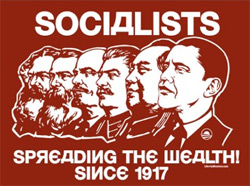
The Left, grounded in the childish superstitions of Marx, views life as economics. One awful flowering of this dangerous silliness is the proliferation of victims. The resource-rich nations of long decolonized Africa and Asia, for example, remain poor because of imperialist exploitation by America and Europe. Women and racial minorities are still, officially, “exploited,” although how that can be taken seriously forty years after the Women’s Liberation Movement and fifty years after centerpiece Civil Rights legislation is never really considered. The Left needs victims and victimizers and the easiest way to invent these clumps of humanity is dreary socialism and its dull-normal offspring, like feminism.
Most of all, the Left needs all things to be, at their core, economic. Although many Americans and many Europeans face daunting problems finding work and paying bills, this is less the result of true economic problems and more the consequence of the awareness by Leftists that the full flowering of prosperity would end the need for their noxious hatreds and coveting. [Read more…]
 by Brian Thomas, M.S. –
 by Jonah Goldberg –
 by Walter Rodgers –


 by Fr. John Moses –