OrthodoxyToday | by Fr. Gregory Jensen | 4/11/2010
On a post on my blog Koinoia (“An Editorial: Orthodoxy & the Public Square“), I wrote that whether or not I like Frank Schaeffer’s politics or his moral theology, or whether or not his support of abortion and gay rights are compatible with the tradition of the Church, the reality is that he is well within the mainstream of current Orthodox opinion in America. According to the PEW survey, the majority of Orthodox laity agree that abortion and gay marriage should be legal. It may surprise you, then, that the problem isn’t Schaeffer – it’s us; specifically, it’s the clergy. For reasons that are not entirely clear to me, we clergy are not effectively communicating the moral tradition of the Church to the laity. Or, if we are, the laity aren’t listening –- which would imply that the clergy are willing to tolerate the laity ignoring the Gospel.
We see the same prevalence of pro-choice, pro-gay marriage positions among Orthodox politicians. This kind of a consistent pattern of belief does not just happen. As in the Catholic Church, we see in the Orthodox Church evidence of a significant pastoral failing. This appears to be more than just a widespread lack of sound moral education for the faithful. It appears to be an embrace of, or at least resignation to, the influence of secularism in our parishes. [Read more…]
 Let God arise, let His enemies be scattered; let those who hate Him flee from before His face!
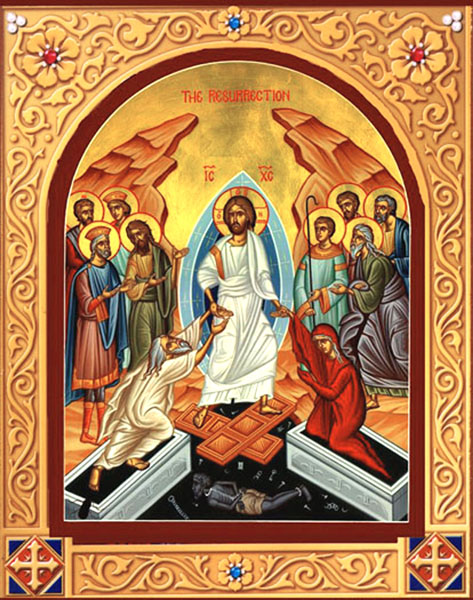 The Paschal Homily of St. John Chrysostom is read at the end of Orthros (Matins) at Pascha, the feast of the Resurrection of Jesus Christ, universally throughout the Orthodox Church. It was composed sometime during his ministry in the late 4th or early 5th century. St. John’s Sermon is traditionally read to the faithful near the end of the Paschal Matins, before the Paschal Liturgy begins.

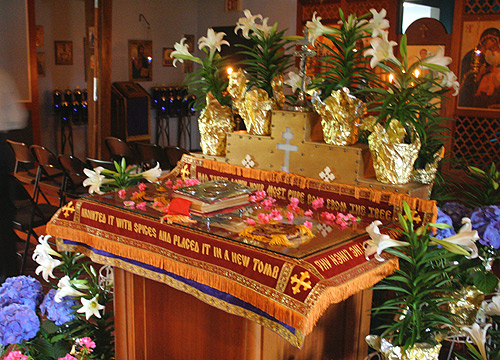 On Friday night, the Matins of Holy and Great Saturday, a unique service known as the The Lamentations at the Tomb (Epitáphios Thrēnos) is celebrated. This service is also sometimes called Jerusalem Matins. Much of the service takes place around the tomb of Christ in the center of the nave. A unique feature of the service is the chanting of the Lamentations or Praises (Enkōmia), which consist of verses chanted by the clergy interspersed between the verses of Psalm 119 (which is, by far, the longest psalm in the Bible).
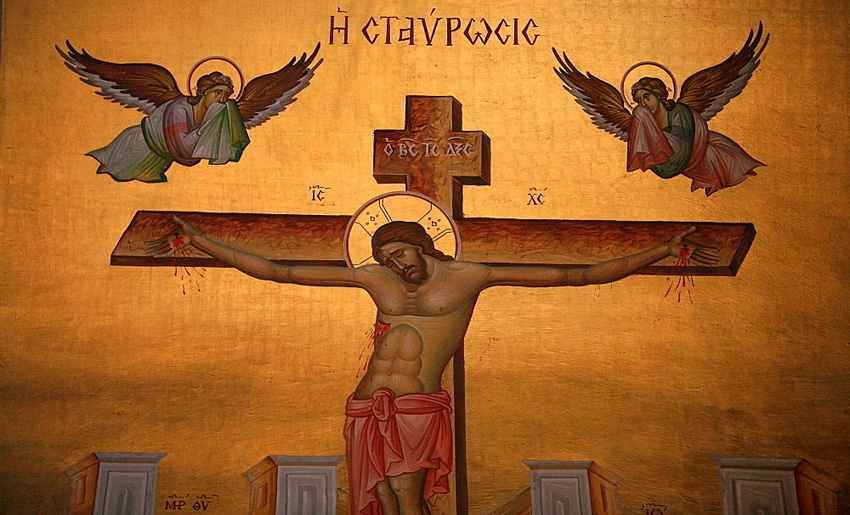
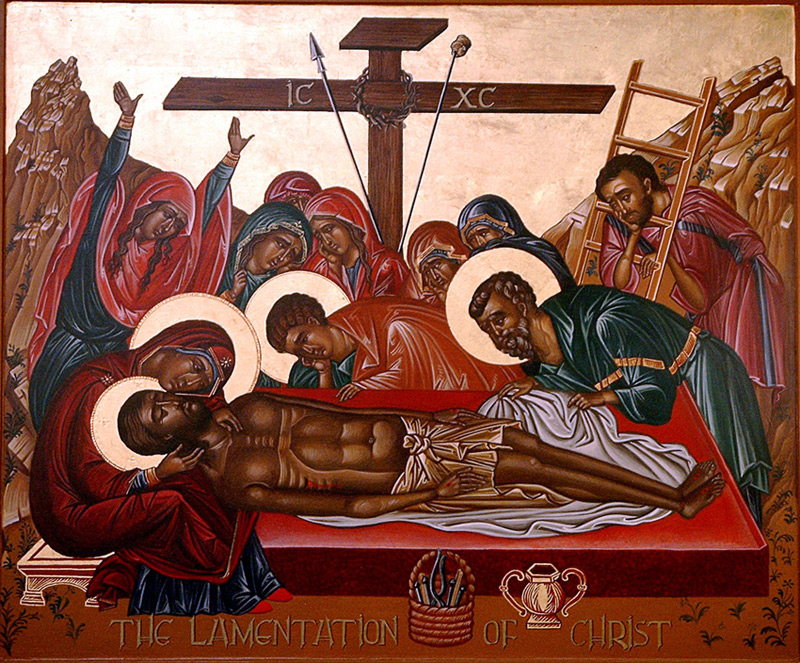 Holy Friday, also known as Good Friday or Great Friday, is a holy day observed by Christians commemorating the crucifixion of Jesus Christ and his death at Calvary. This day is commemorated during Holy Week as part of the Paschal Triduum on the Friday preceding Easter Sunday, and often coincides with the Jewish observance of Passover.
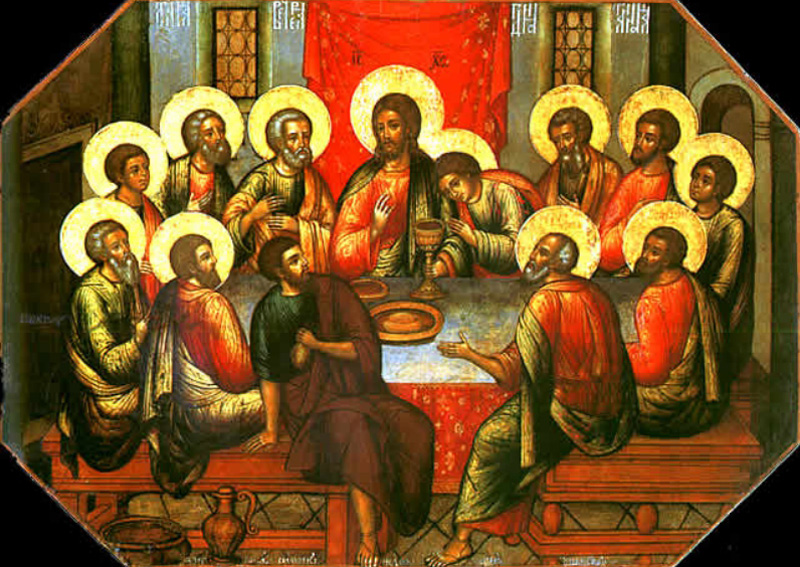 Holy Thursday begins with the celebration of vespers and the Divine Liturgy of St. Basil with a Reserved Eucharist in representation of the earthly presence of Christ realized at the Last Supper.
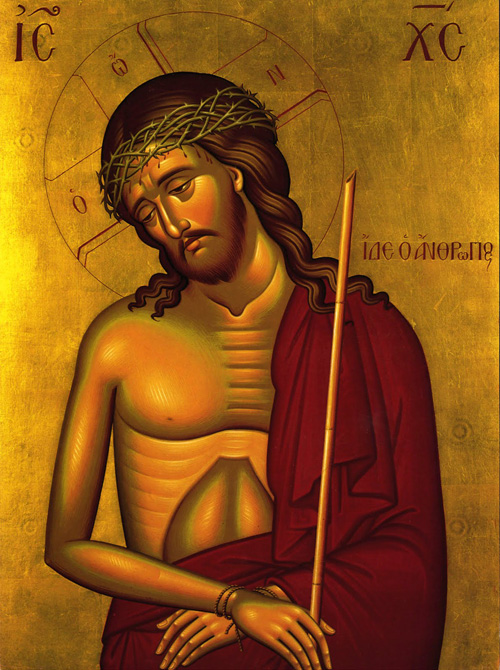 Christ the Bridegroom is the central figure in the parable of the ten Virgins (Matthew 25: 1-13); Christ is the divine Bridegroom of the Church as described in the Book of Isaiah (chapter 54), as well as the primary image of Bridegroom Matins.